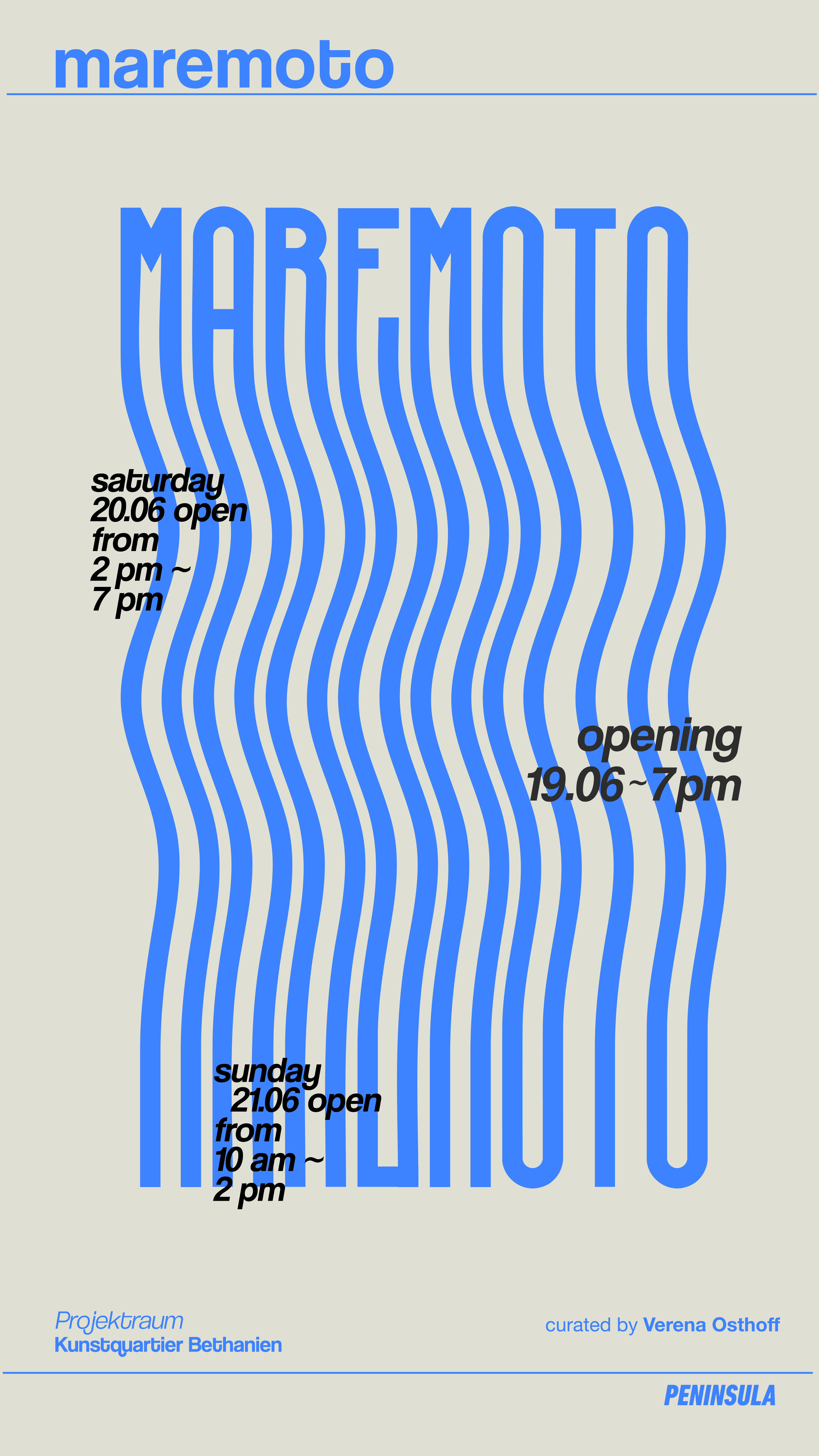
Maremoto
19.Juni 2026
19h
Projektraum Kunstquartier Bethanien
maremoto begins with a gesture of invitation. For the third time, members of Peninsula
- a Berlin-based association composed of largely Italian members - invited artists, who
in turn extended the invitation to further artists, generating a wave-like network of
encounters and collaborations. From this process, 35 artistic positions have emerged.
This act of passing on and connecting forms the foundation of the exhibition, creating a
layered dialogue between diverse perspectives and practices.
At the heart of the exhibition lies the idea of connection and coexistence in all their forms:
living together in urban spaces, the relationship between humans and nature, between
construction and deconstruction, destruction and rebuilding. Just as a maremoto can
unleash an unstoppable force of devastation, the exhibition also reflects on ruptures,
transformations, and the traces they leave behind. At the same time, it turns toward what
can arise in the aftermath - reconstruction, community, and the beauty that can emerge
through collective action.
The works on view move between fragility and strength, intimacy and shared experience.
They explore how we inhabit spaces together, how we shape, transform, and recreate
them. In a time marked by uncertainty and constant change, maremoto III opens a
space for resonance, dialogue, and connection - a space in which new forms of
coexistence may emerge from diversity.
An exhibition series by Peninsula. Curated by: Verena Osthoff

dehnende Dellen, keimende Nische, träumende Säume, pochende Triebe
21. März - 29. März 2026
Stadtraum Arnsberg
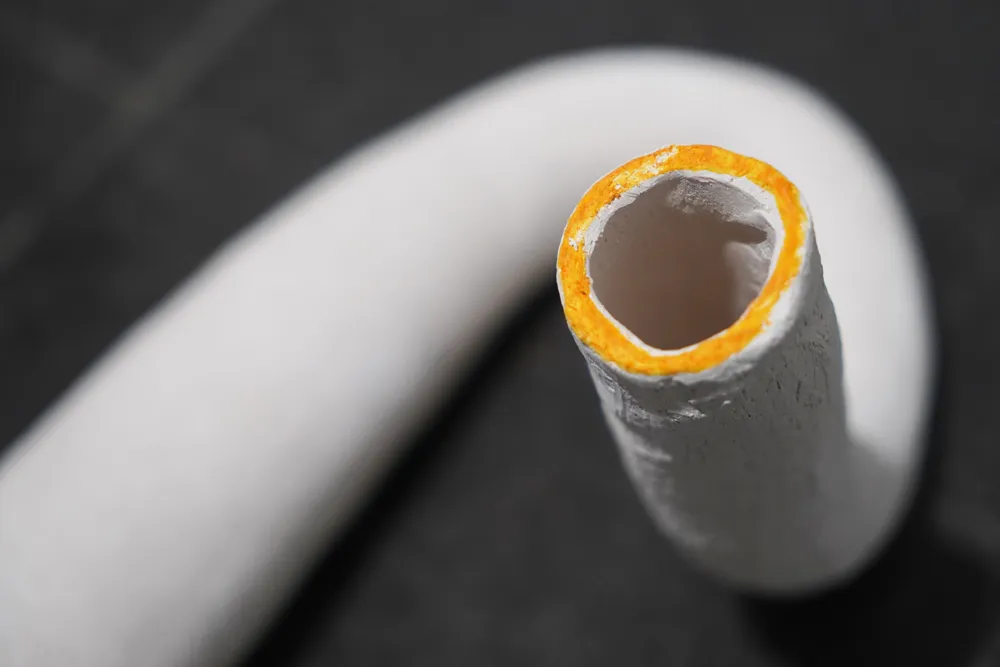
Zehn keramische Objekte sind im öffentlichen Raum platziert und lassen den Stadtraum neu erleben. Der Umgebung wird eine Ebene von Veränderung, Vorstellungskraft und Lebendigkeit hinzugefügt.
In der Mythologie gilt Gaia als Verkörperung der Erde – als Ursprung alles Lebendigen. An dieses Verständnis eines fortwährenden Werdens knüpfen Yala Juchmann und Kathrin Köster mit ihrer ortsspezifischen Installation an. Sie entwickeln keramische Objekte, die an unterschiedlichen Orten der Innenstadt im öffentlichen Raum platziert sind.
Die Arbeiten erscheinen in Nischen, an Fassaden und Übergängen. Sie treten nicht monumental auf, sondern als subtil gesetzte Interventionen. Ihre organisch-kreatürlichen Formen – zwischen Struktur, Wesen und Gewebe ergänzen die gebaute Umgebung um eine Ebene von Veränderung, Vorstellungskraft und Lebendigkeit.
Damit berühren sie das Stadtbild nicht nur als sichtbare Erscheinung, sondern als historisch, politisch und gesellschaftlich ausgehandelten Ort. Die Eingriffe verschieben Wahrnehmungen und verweisen darauf, dass unser Zusammenleben kein statisches, sondern ein wandelbares Konstrukt – und vor allem ein gemeinsam gestalteter Lebensraum ist.
Ten ceramic objects have been placed in public spaces, inviting people to experience the urban environment in a new way. They add a dimension of change, imagination and vitality to the surroundings.
In mythology, Gaia is regarded as the embodiment of the Earth – the source of all life. Yala Juchmann and Kathrin Köster draw on this understanding of a process of constant becoming in their site-specific installation. They have created ceramic objects that are situated in public spaces at various locations throughout the city centre.
The works appear in niches, on façades and at crossings. They do not appear monumental, but rather as subtly placed interventions. Their organic, creature-like forms – somewhere between structure, being and tissue – add a layer of change, imagination and vitality to the built environment.
In doing so, they engage with the urban landscape not merely as a visible phenomenon, but as a historically, politically and socially negotiated space. These interventions shift perceptions and highlight that our coexistence is not a static but a malleable construct – and, above all, a shared living space.
The Surface of your Tongue
9. Januar 2026
18h
Axel Obiger Galerie, Raum für zeitgenössische Kunst Brunnenstrasse 29 10119 Berlin I Germany
Upstream Algae Apéro
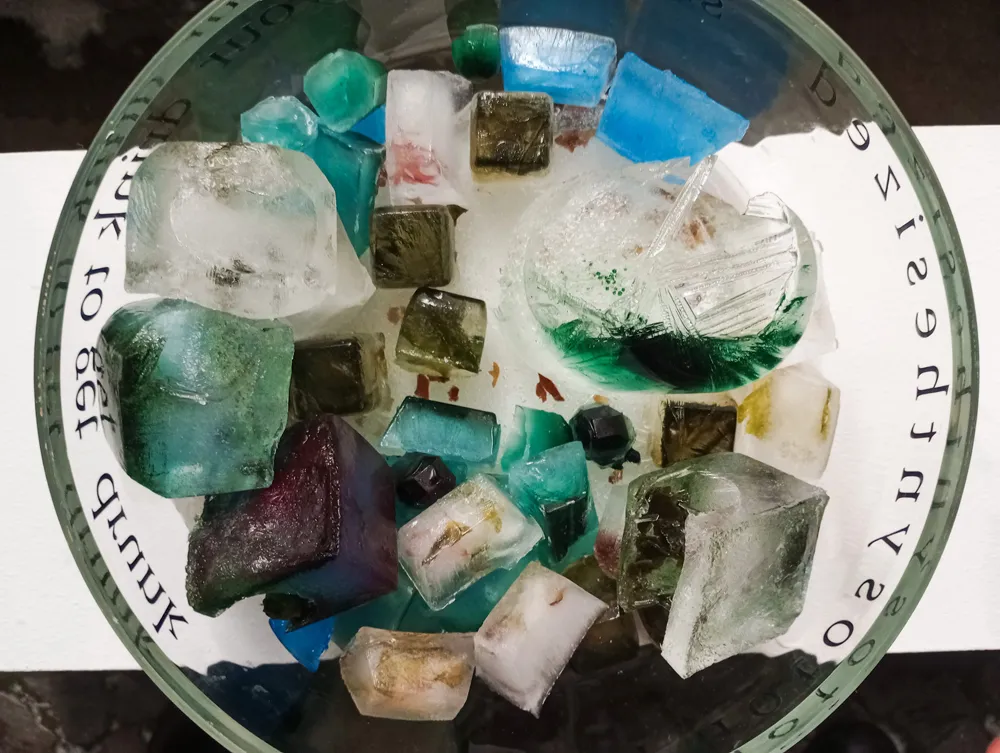
Zum Abschluss von Inceptive Spaces lädt das Kollektiv Upstream Algae zu einem Apéro ein. Algendrinks mit schmelzenden Eis-Skulpturen – inspiriert von Ateliergrundrissen und modularen Bausteinen – verweisen auf Ateliers als fragile, sich wandelnde Produktionsräume.
Im Dialog mit der Ausstellung und der Situation des Atelierhauses Hobrechtstraße 31 verbindet der Abend künstlerische Prozesse mit Fragen kollektiven Zusammenlebens, räumlicher Bedrohung und gemeinsamer Handlungskraft.
Upstream Algae ist ein partizipatives Kunstprojekt, das Menschen dazu einlädt, Algen als lebendige Wissensträger zu begegnen. An der Schnittstelle von Kunst und Wissenschaft erforscht das Projekt Algen nicht als Ressource oder Störfaktor, sondern als Mitakteur:innen und Mentor:innen – und eröffnet Räume für sinnliche, symbolische und materielle Begegnungen. Gemeinsam mit Wissenschaftler:innen und ortsspezifischen Communities untersucht Upstream Algae, wie Algen neue Narrative des Zusammenlebens, der Anpassung und ökologischen Intimität prägen können. Was können wir aus ihrer Biologie, ihrer Resilienz und ihrer Rolle in unseren gemeinsamen planetaren Systemen lernen?
To mark the conclusion of Inceptive Spaces, the Upstream Algae collective is hosting a drinks reception. Algae-based drinks served with melting ice sculptures – inspired by studio floor plans and modular building blocks – highlight studios as fragile, ever-changing spaces of production.
In dialogue with the exhibition and the context of the Hobrechtstraße 31 studio building, the evening combines artistic processes with questions of collective coexistence, spatial threat and shared agency.
Upstream Algae is a participatory art project that invites people to encounter algae as living repositories of knowledge. At the intersection of art and science, the project explores algae not as a resource or a disruptive factor, but as co-actors and mentors – opening up spaces for sensory, symbolic and material encounters. Together with scientists and site-specific communities, Upstream Algae investigates how algae can shape new narratives of coexistence, adaptation and ecological intimacy. What can we learn from their biology, their resilience and their role in our shared planetary systems?
„Die Menschen sind im ganzen Leben blind“ / “Lifelong, all you men are blind” (Goethe, Faust II, Midnight)
Vernissage Fri 17 Oct
5 – 9 pm
frontviews at HAUNT Kluckstraße 23 A Yard D – 10785 Berlin
With the words “Lifelong, all you men are blind / Now, Faust, be so to the end!”, the personification of Care causes the protagonist to go blind at the end of Goethe's two-part tragedy. Up to this point, Faust – accompanied by Mephisto – had developed into an embodiment of modern capitalist man, who pursues his vision of the good life regardless of the consequences. In his constant “march forward,” he wants nothing to do with care. He cannot recognize his blindness as such and interprets the sound of his gravediggers as work on his large-scale construction project.
The scene can be seen as a parable about a phenomenon that had already been the subject of tragedies in ancient times as a motif of blindness. As a symbol of loss of reality and self-deception, blindness has apparently lost little of its relevance in the nearly two hundred years since “Faust.” Rather, in the film The Zone of Interest (2023), it takes on the form of an emotional blindness in the shape of a privacy wall surrounding the idyllic garden of concentration camp guard Rudolf Höß and his family. According to director Jonathan Glazer, this scene may rightfully be understood as a metaphor for current events.
For the group exhibition “Die Menschen sind im ganzen Leben blind / Lifelong, all you men are blind”, the curatorial team (Almut Hüfler, Katja Pudor, and Andreas Schmid) invited fourteen international artists to explore the questions raised by these forms of blindness in our present day and their possible counterstrategies: Where and under what conditions do fragmentation of reality and loss of reality manifest themselves, and how can access to reality be restored, how can care and concern be allowed again?
Using a variety of different media (painting, drawing, sculpture, video, site-specific installation, performance), a walk-in discourse emerges in which, against the backdrop of a psychological phenomenon, fundamental questions are asked about our relationship to nature, our perception of time, our relationship to history and to our fellow human beings.
mit: Gökçen Dilek Acay, Amer Al Akel, Anna Bittersohl, Madeleine Dietz, Martin Albrecht Fulton, Maria Kassab, Kathrin Köster, Claudia Mann, Warren Neidich, Viktor Petrov, Katja Pudor, Andreas Schmid, Sten Saarits, Nicole Wendel
curated by Dr. Almut Hüfler, Katja Pudor, Andreas Schmid
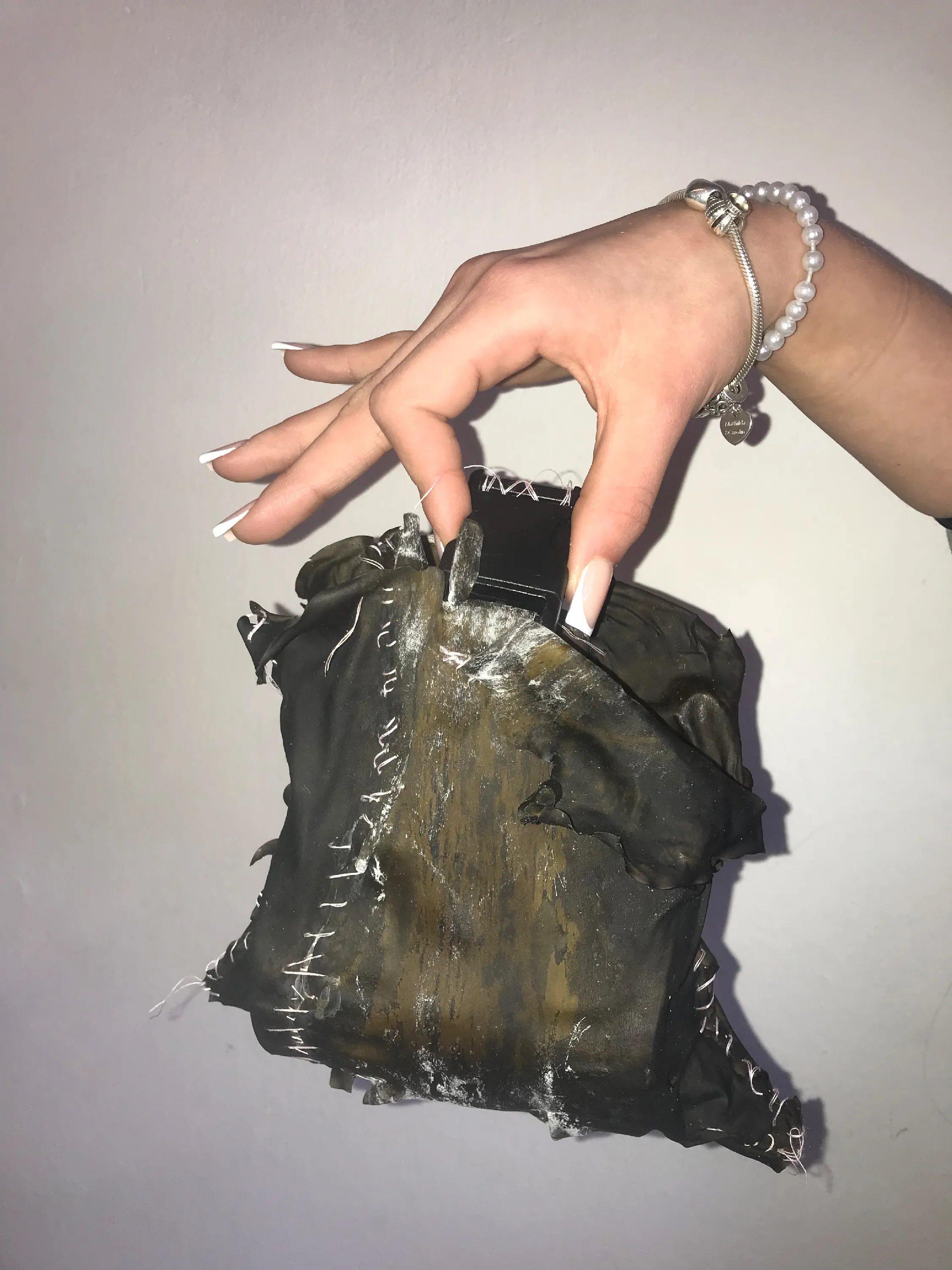
Residency mit Daniel Kupferberg und Carolin Seeliger in Havmøllen, Ebeltoft, Dänemark
30. März- 6. April 2025
Havmøllen, Ebeltoft, Dänemark
Als deutsch-dänisches Künstlerkollektiv Upstream Algae erforschen wir die Möglichkeiten von Algen in Bezug auf ihre Materialitätund Metaphern:Während unserer Residenz in Havmøllen werden wir vor Ort ein "Algenlabor" einrichten. Wir möchten gemeinsam mit den Algen Objekte schaffen, die sowohl mit unserer Konsumkultur als auch mit Verbindung mit dem Meer stehen: Weben mit Algen, Herstellung von Biokunststoff, Malen mit Algenpigmenten: Es werden begehrenswerte, tragbare Accessoires und praktische Gegenständeentstehen. Außerdem werden wir gemeinsam einen großen Cyanotypie-Druck auf Stoff direkt am Meer herstellenein visuelles Fest aus Algen, Menschen, Haaren, Plastik, Sand, Wind, Quallen - dieGrenzen zwischen der menschlichen und der nicht-menschlichen Welt.Er wird der Sonne ausgesetzt und später für die anwesenden Besucher zu einer einladenden Installationam Freitagabend, 4. April. Das Menü wird ein mit Algen angereichertes Entree und weitereAlgenlabor-Prototypen, als Teil des Frühlingsfestes von Havmøllen sein.
As a German/Danish artist collective Upstream Algue Spopping Spree from Berlin we set up a workshop in which we will be exploring the possibilities of algae in terms of its materiality and metaphors: During our residency at Havmøllen, we will be setting up an “Algae Lab” on site. As part of this, we are inviting participants to a workshop on Wednesday April 2nd. We would like to create objects together with the algae- related to our consumption culture, as well as to our connection with the sea: weaving with algae, making bioplastics, painting with algae pigments: desirable, ready-to-wear accessories and practical objects will be created. Additionally, together we will make a large cyanotype print on fabric right by the sea: a visual feast of algae, people, hair, plastic, sand, wind, jellyfish - blurring the boundaries between the human and non-human world. It will be exposed to the sun, and later for attending visitors for a welcoming installation on Friday evening April 4th. The menu will include an Algae-infused Entree and further Algae Lab prototypes, as part of the Spring Festival of Havmøllen.